


Hi everyone,
Amidst the latest volley of legal AI announcements, I thought about an interesting feature set that Harvey put out a while ago that applies to contract data (video and demo page available here).
The idea behind the features is being able to interact with your contract data during activities like contract diligence and portfolio review within a tabular view, using a natural language interface (screenshot below):
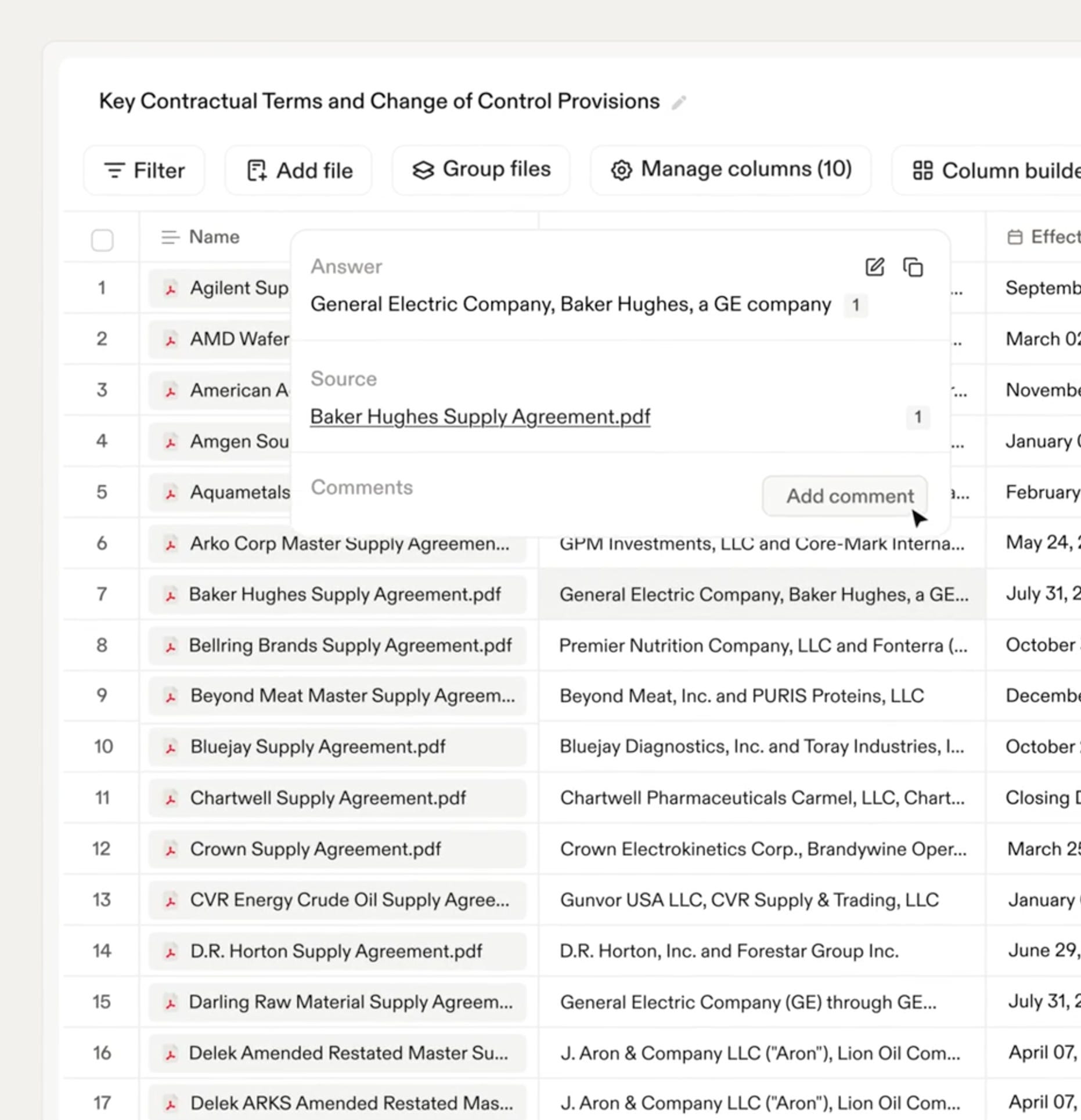
I think it’s a cool video. One thing that came to mind when looking at it is: what does the user flow look like when actually using the feature set? In other words, what is the user experience when interacting with and consuming the data to make decisions? And does this change over time, for example when the data set grows and more users are added to the system?
To flesh this out, let’s try defining a basic framework to assess the features. Then in part two, we’ll apply them to a hypothetical but practical workflow.
Quick caveat: I haven’t used this feature directly and am basing my analysis on what I see in the video/demo page along with experience using and building other similar AI-powered features in the past. In addition, this isn’t meant to be an exhaustive list. For a more comprehensive framework, I’ve previously shared a more detailed contract AI vendor diligence questionnaire.
Evaluation Considerations
That said, in general, there are three main things I’d consider when assessing product features and determining whether, on balance, they successfully solve user problems for the specific workflows involved:
Relevance of the feature - the problem set the feature is solving for, with corresponding level of priority.
Performance vs. expectation - how the breadth, accuracy, reliability and scalability of the model output compare relative to the user’s needs. This is particularly important for AI-powered features due to both the probabilistic outputs involved and related, the actual value of the feature may be different than what was expected after watching the demo.
User adoption costs - more sophisticated features sometimes have higher user adoption costs due to a perceived or actual need for increased training or onboarding, coordination, and maintenance to use the features effectively (and in some cases, the ongoing cognitive load / investment).
Next up, the fun part: applying this framework to dig into a practical user example.